Great food starts before the kitchen.
Phytofed shows how growing, choosing, storing and cooking ingredients changes their flavour, colour, nutritional value and environmental impact.
Aromatic leaves and stems — basil, parsley, rosemary, thyme, mint.
Showing 5 ingredients
Basil is a tender aromatic leaf, grown for its sweet, peppery-green scent. It is the soul of summer cooking — pesto, tomato salads, and the finishing tear of leaves over a dish. This page follows basil from plant to plate: why heat dulls it, why you tear rather than chop, and what gives the leaf its distinctive aroma.
Mint is a fast-growing aromatic leaf with a cool, sweet scent that reads as both fresh and sharp. It lifts peas and potatoes, fuels teas and juleps, and bridges sweet and savoury. This page follows mint from plant to plate: how to keep its colour, why it is best added late, and what gives the leaf its distinctive cool aroma.
Parsley is a bright, clean-flavoured leaf too often treated as a garnish. Used by the handful it becomes a vegetable in its own right — the base of salsa verde, tabbouleh and persillade, and a quiet backbone of stocks. This page follows parsley from plant to plate: how to keep it fresh, why flat-leaf and curly differ, and what gives it its clean, green aroma.
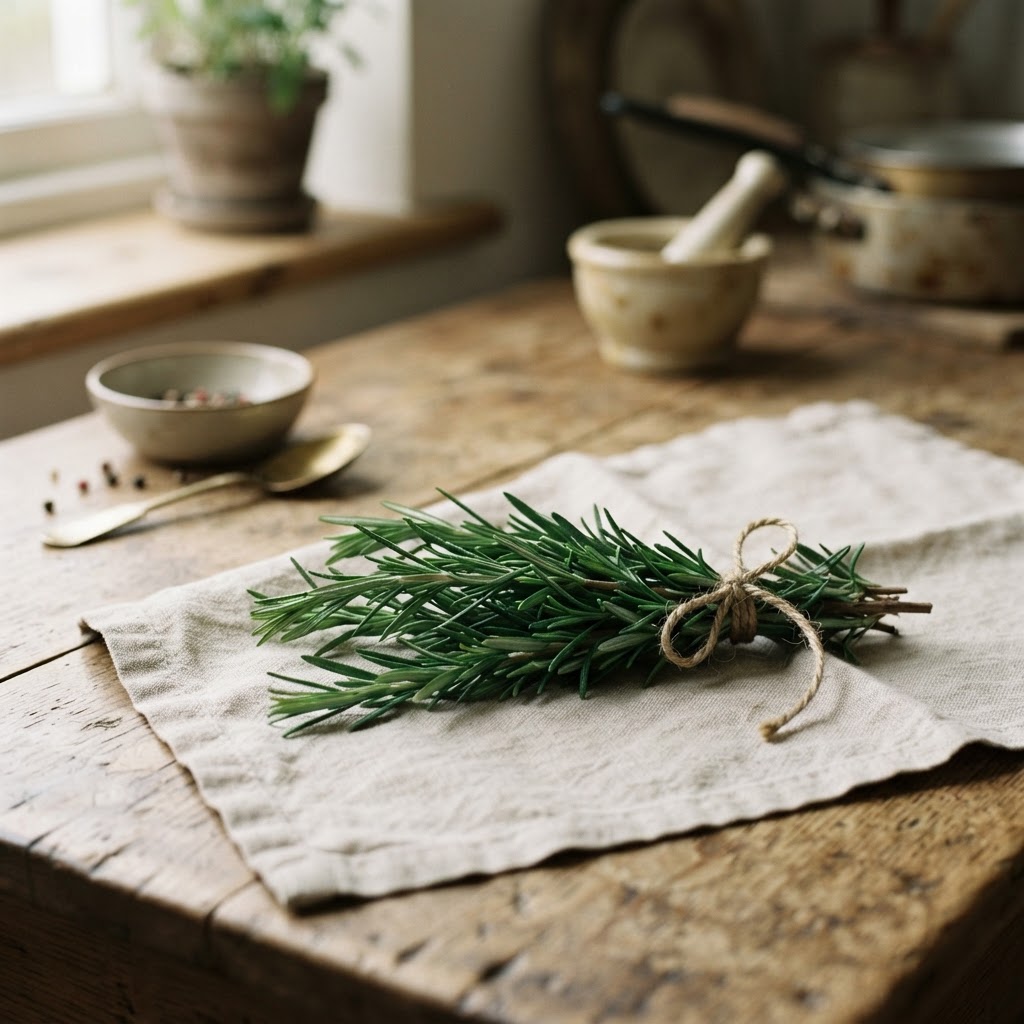
Rosemary is a woody, evergreen herb with needle-like leaves and a deep, resinous aroma of pine and lemon. It stands up to roasting, grilling and long cooking where tender herbs would collapse. This page follows rosemary from plant to plate: how to use its strong scent, why a little goes a long way, and what gives it its distinctive resinous aroma.
Thyme is a low, woody herb with tiny leaves and a warm, earthy aroma of thyme and lemon. It is a quiet workhorse of slow cooking — stocks, stews and roasts — and pairs with almost everything savoury. This page follows thyme from plant to plate: how to use its strong scent, why a little goes a long way, and what gives it its distinctive warm aroma.