
Aged Garlic
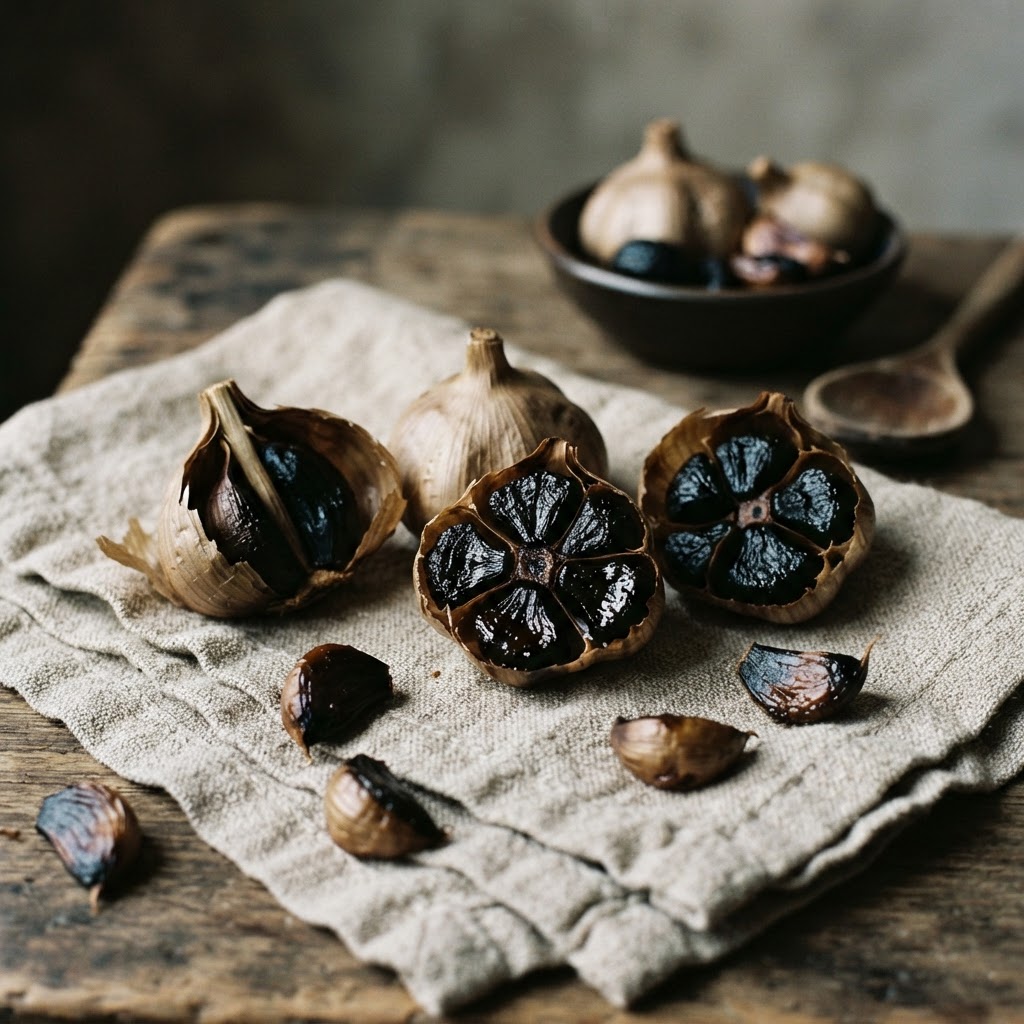
Aged garlic is whole garlic put through weeks of controlled heat and humidity, a slow Maillard browning that turns the cloves black, soft and sticky and converts their fierce sulphur bite into something molasses-sweet and balsamic. It is neither raw nor roasted garlic but a third thing, an umami ingredient used for dressing, finishing and depth. This page follows aged garlic from bulb to black clove: how the transformation happens, what changes inside, and where it belongs on the plate.
Varieties
Whole-bulb black garlic
- Looks
- Entire heads aged in the skin; cloves turn black, soft and sticky inside dry papery wrappers.
- Taste & texture
- Sweet, molasses-balsamic, soft and chewy; no pungency.
- Best for
- Finishing, dressings, umami depth, rubs.
Peeled black garlic cloves
- Looks
- Individual soft black cloves sold ready to use; quicker and less messy.
- Taste & texture
- Same sweet balsamic character; ready to blend or slice.
- Best for
- Pastes, sauces, quick finishing.
Black garlic paste
- Looks
- Smooth dark paste of aged cloves, sometimes with a little oil or salt.
- Taste & texture
- Concentrated sweet-umami; easy to dose.
- Best for
- Marinades, dressings, stirred into sauces.
Aged garlic extract (AGE)
- Looks
- A supplement form, not a kitchen ingredient; dried and standardised extract.
- Taste & texture
- Mild and odour-light; off the plate.
- Best for
- Supplement use only, not for cooking.
Seasonality
Global (produced year-round)
Made to order from cured garlic; no fixed seasonEast Asia (origin)
Historically a Korean and Japanese product; made year-roundRipeness & freshness
Soft black cloves
Cloves are black, soft and slightly sticky; not pale, hard or crumbly.
Sweet balsamic aroma
A molasses-balsamic, slightly smoky smell; no sharp raw-garlic sulphur note.
Intact wrappers
Whole bulbs keep dry, intact papery wrappers; mould or dampness is a fault.
No mould
Black cloves are uniformly dark; fuzzy white or green mould is spoilage, not aging.
What to look for when buying
Soft and black
Choose bulbs whose cloves feel soft through the wrapper; hard cloves are under-aged.
Balsamic aroma
It should smell sweet, molasses and balsamic; sharp sulphur means it was aged too fast or too short.
Whole vs peeled
Whole bulbs keep longer; peeled cloves or paste save time and mess.
Trust the maker
Aging is temperature- and humidity-controlled; buy from a maker who states the process.
Growing, sourcing & harvest
Made, not grown
Aged garlic starts as cured garlic; it is made, not harvested, in a controlled chamber.
Aging conditions
Weeks at roughly 60–80 °C with controlled humidity drive the Maillard browning; no microbial fermentation is involved.
Time
Typically 3–6 weeks; longer makes a deeper, sweeter, darker clove.
Harvest & post-harvest
- Aged garlic keeps months, far longer than fresh, once the wrappers stay dry.
- Store away from light and heat; the cloves stay soft and sticky.
- Once a bulb is split, use the cloves within a few weeks for best flavour.
Storage
Cool, dark and dry; keeps months in a paper bag or box.
Refrigerate in a sealed container; use within a few weeks.
Refrigerate and use within the maker's window; freeze in small portions for longer.
Raw & cooked, and how to cook it
Flavour
Raw
Eaten raw, it is already sweet and balsamic, with no fierce bite.
Cooked
Heat deepens the umami; it dissolves into sauces and glazes.
Aroma
Raw
Molasses, balsamic and slight smoke.
Cooked
Deeper, toasted umami; it seasons a dish the way soy or miso does.
Texture
Raw
Soft, sticky and chewy, like a dried fruit.
Cooked
Melts and dissolves; it thickens and darkens a sauce.
Finishing raw
Sliced or crushed into a dish at the end for sweet balsamic depth.
Chef's note —Mash a clove to a paste with a pinch of salt; stir in just before serving.
In dressings and sauces
Blends into vinaigretts, mayo and glazes for umami.
Chef's note —Blend with soy, vinegar and oil; it emulsifies and darkens a dressing.
In rubs and marinades
Adds depth and colour to meat and vegetable rubs.
Chef's note —Mash with salt, pepper and oil; it coats and seasons better than raw garlic.
Stirred through slow cooks
Dissolves into braises and soups, adding body and umami.
Chef's note —Add whole cloves early; they melt into the liquid.
Flavour & texture notes
- Sweet and molasses
- Balsamic and umami
- Soft and sticky
- No raw-garlic pungency
Flavour notes & harmonies
The top flavour notes of aged garlic and what each one harmonises with in dishes. On the left, the strongest notes of aged garlic, sized by strength. On the right, the notes outside its profile that each one pairs with most strongly, with the harmony score of each pair.
Each block on the left is one of the top notes, sized by its strength. A stronger note shows more of its harmonies. Bars show the harmony score out of 10. Flavour notes and harmony pairings are curated from verified flavour-pairing reference data.
Colour & plant compounds
Aging turns garlic black through Maillard browning, not microbial fermentation: low, controlled heat drives sugars and amino acids together over weeks, forming dark, complex compounds and breaking down the sharp allicin into milder, more stable sulphur compounds. The result is higher in some antioxidants than raw garlic, while its pungent allicin is largely gone, which is why aged garlic tastes sweet rather than fierce. How much of these compounds the body takes up is still being studied, and figures should be treated with caution.
Maillard products (melanoidins)
OtherWell establishedDark, complex compounds from the browning reaction; responsible for the colour and much of the aroma.
S-allyl cysteine (SAC)
Organosulfur CompoundsEmerging evidenceA stable, water-soluble organosulphur more abundant in aged garlic than raw; the marker compound for aged garlic extract. Effects in humans remain mixed and debated.
Allicin (largely absent)
Organosulfur CompoundsWell establishedFood scienceRaw garlic's pungent compound is mostly broken down during aging; aged garlic has little allicin, which is why it is not fierce.
Waste reduction
Use the wrappers
Papery wrappers flavour stock; strain before use, just like fresh garlic skins.
Save the paste
Blend surplus cloves with a little oil and freeze in ice-cube trays for ready doses.
A drop seasons a lot
One clove flavours a whole dressing; start small and taste.
Sources
United States Department of Agriculture
No standard USDA entry for aged or black garlic exists; this raw-garlic composition is the starting reference, but Maillard aging materially changes sugars, antioxidants and organosulphur compounds.
Covers aged garlic extract (AGE) and its distinct organosulphur profile, including S-allyl cysteine.